BEFORE WE DIVE IN
It’s a simple question:
How many English words do you know?
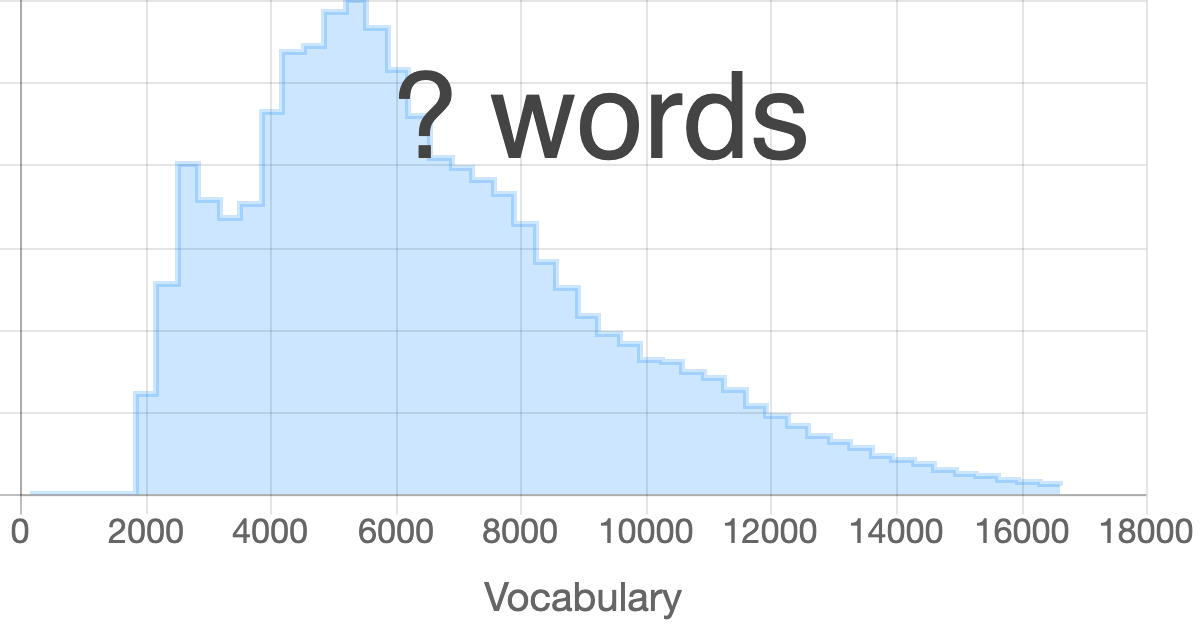
The graphic below shows how many words people know according to their level.

The data comes from a test that measures receptive vocabulary. That is the number of words a person recognises, even if they don’t actively use them.
It places everyone on the same scale, from beginners who have just started learning English to highly educated native speakers.
The results are measured in word families, meaning related forms such as limit, limited, and limitless count as a single unit.
What’s striking is how much vocabulary must be acquired to move from one level to the next, and how large the gap is between advanced learners and the native range.
So, take two minutes to take the test, and answer the question:
How many words do you know?

The more words you know, the more precise you can be
This week’s three tips:
SOMETHING TO AVOID 🫣
🤦🏻♀️ “Mother’s langage”
In English, mother’s language sounds literal, unusual, and unnatural.
Native speakers don’t use it to mean lengua materna.
✅ “Mother tongue”
The closest traditional equivalent would be mother tongue.
You could also say native language.
Spanish is my mother tongue, but I work primarily in English.
SOMETHING TO SOUND CONFIDENT 🧐
👔 Business expressions
“To bridge the gap”
To reduce or eliminate the distance between two levels, states, or expectations.
In professional English, it often refers to closing a skills gap, knowledge gap, performance gap, or communication gap.
We need to bridge the gap between advanced learners and native-level communication
SOMETHING TO DO 👀
NEXT STEP ➡️

LOOKING FOR MORE?🔎

Keep learning,
Jack & Krystallo
Please give us your opinion about this newsletter by replying to us ✉️
and remember to follow us on social media 🫶